Your cart is currently empty

Takeover – Louise Des Places
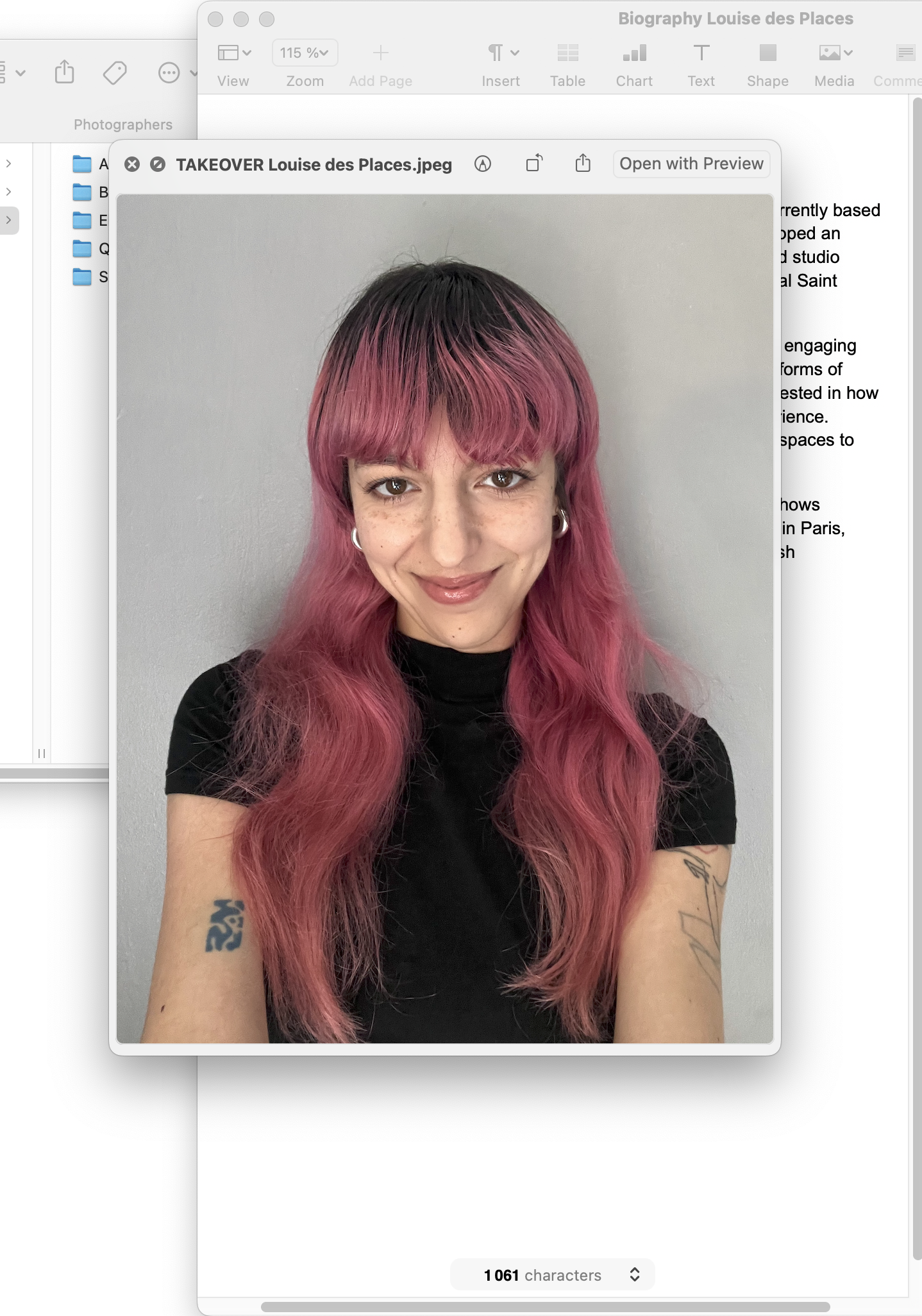
Her work explores intimacy, identity, and the construction of belonging, engaging with personal and collective mythologies, queer theory, language, and forms of fictional archaeology.
Curator : Louise Des Places
Louise des Places is a curator, writer, and arts journalist from Paris, currently based in London. She previously lived and worked in Berlin, where she developed an independent curatorial practice alongside roles as a gallery director and studio manager. She is currently pursuing a second Master’s degree at Central Saint Martins, University of the Arts London.
Her work explores intimacy, identity, and the construction of belonging, engaging with personal and collective mythologies, queer theory, language, and forms of fictional archaeology. Across writing and exhibition-making, she is interested in how narratives, both lived and imagined, shape emotional and spatial experience. Alongside this, she maintains a poetic practice, regularly invited by art spaces to present and read her work.
Since 2021, she has curated over 30 exhibitions across Europe, with shows presented in renowned art spaces including 3537/Dover Street Market in Paris, Culterim Gallery and Garten_Studios in Berlin, and Index – The Swedish Contemporary Art Foundation in Stockholm.
Anna Haillot
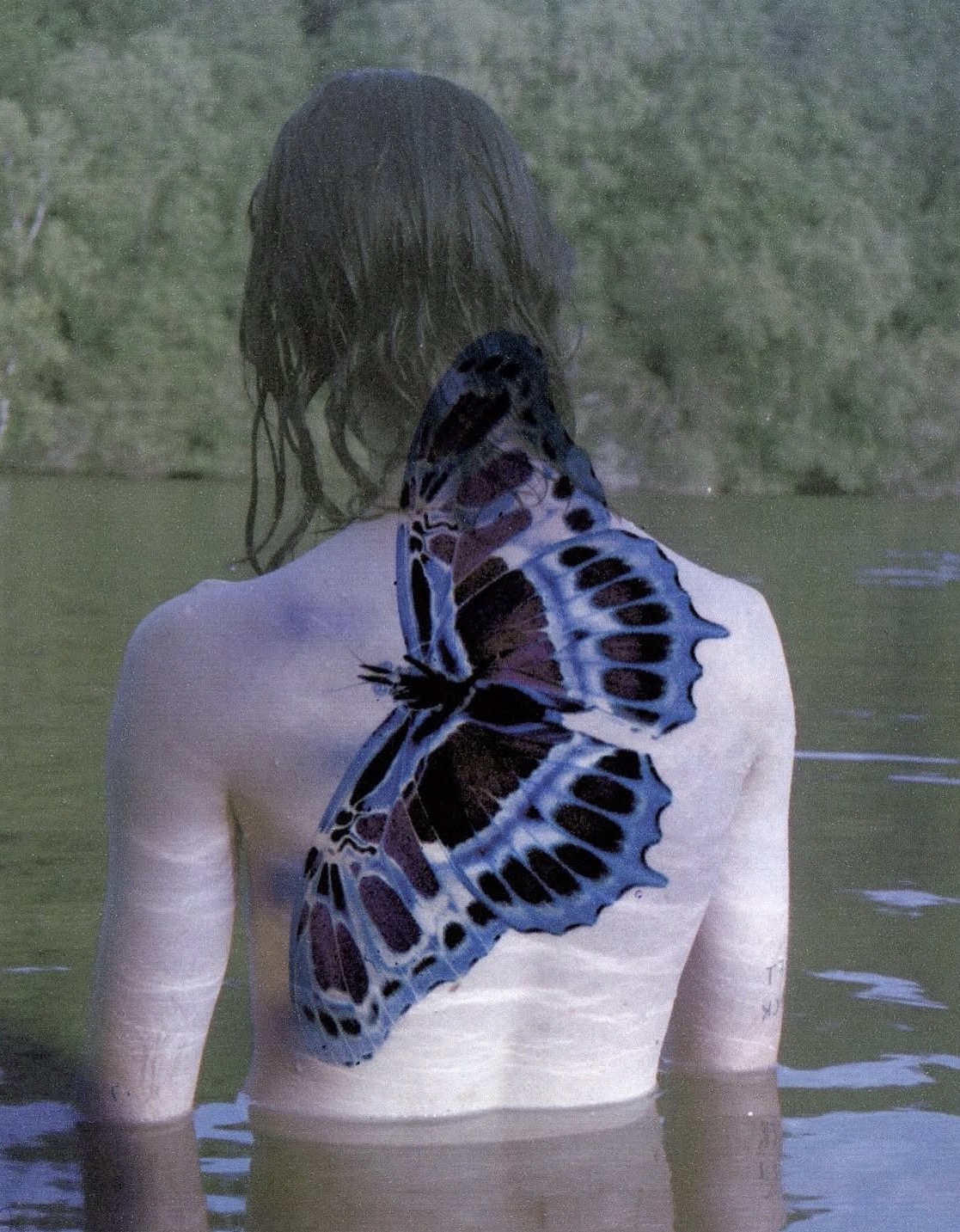
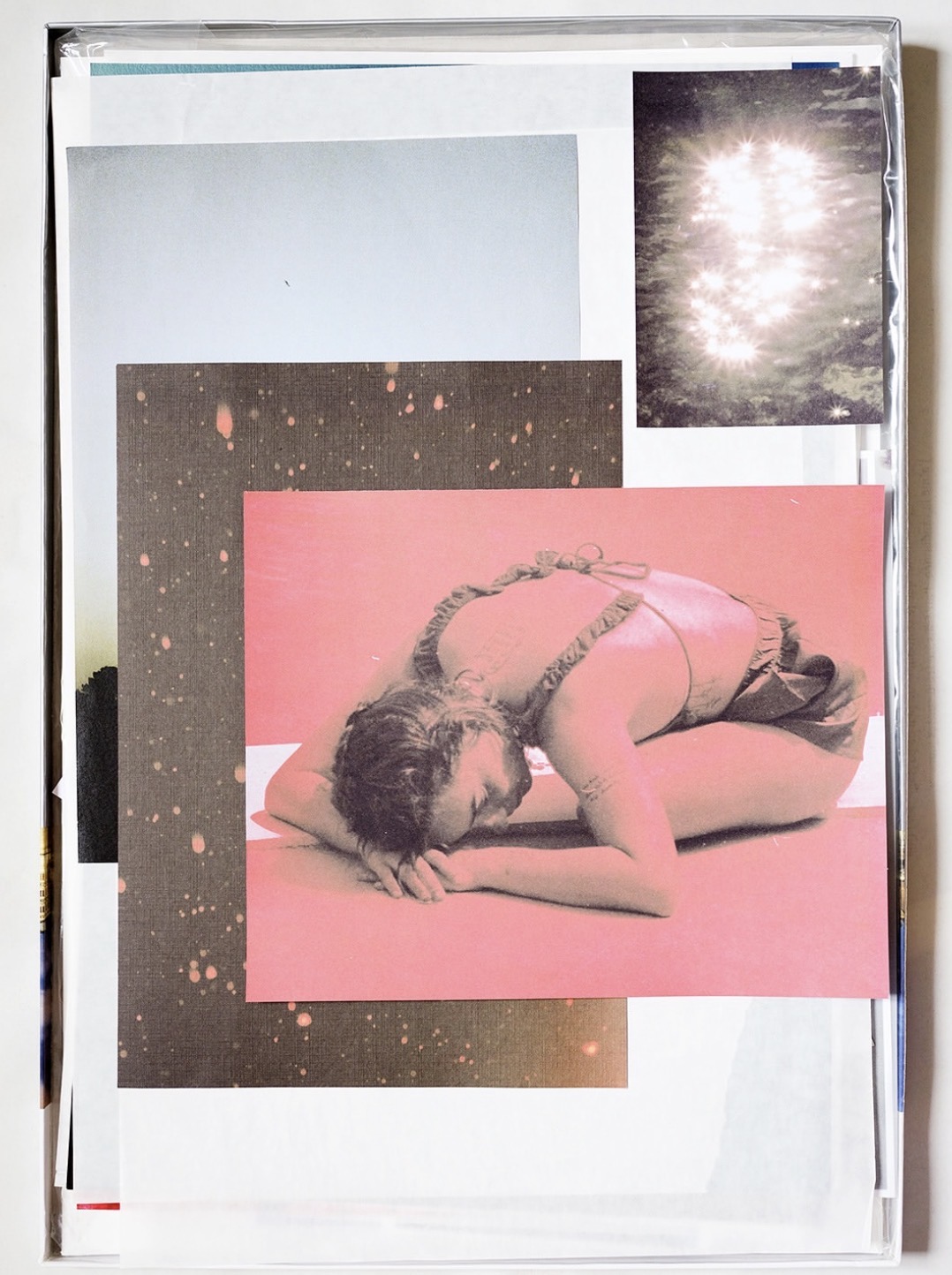
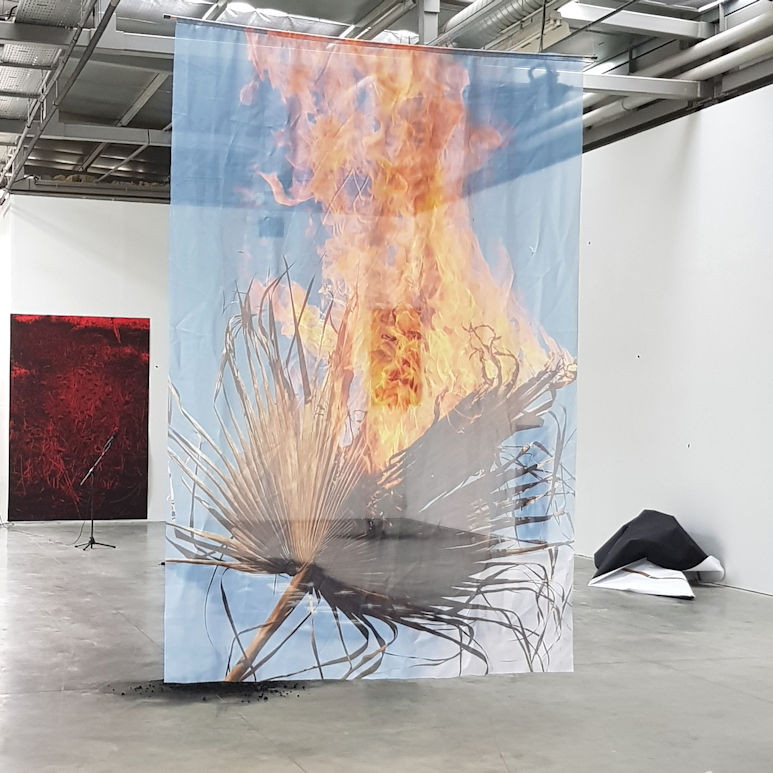
Anna Haillot is a multidisciplinary artist working primarily with photography, poetry, and installation. Her work explores questions related to places and spaces, and the imprints that a place can leave on us.
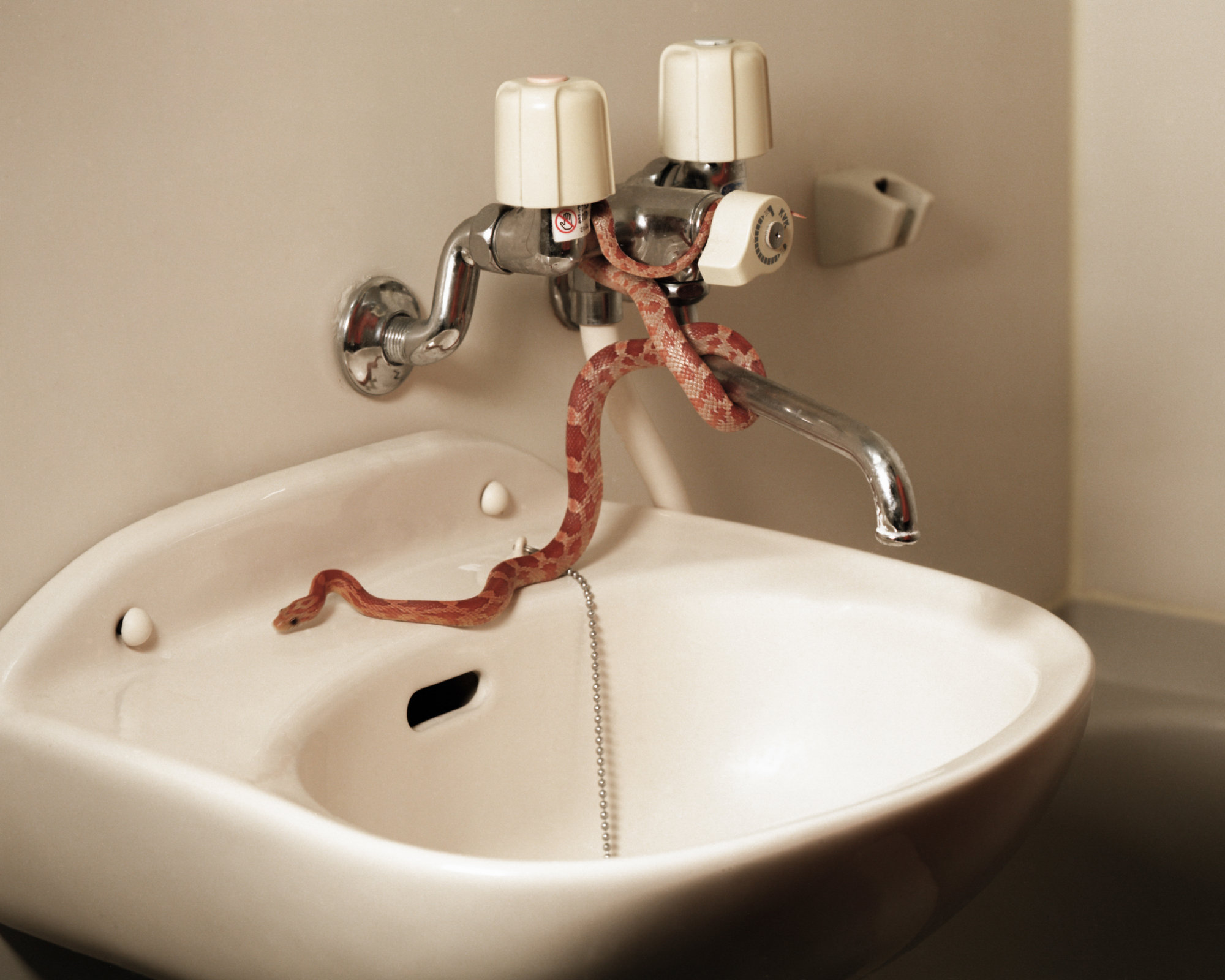
Her starting point is the French Riviera, which she has a personal connection with, as well as the historical, social, and societal issues it compels her to confront. It is a territory that reveals many paradoxes, peculiarities, and sensual and tragic fantasies, which she takes pleasure in countering, deconstructing, and transforming, going so far as to create a counter-fantasy of this place, “in which the sun would not be luminous but scorching, where dogs would prowl in the mystery of the night and dragonflies would die in the middle of the sea”.
Bella Spantzel
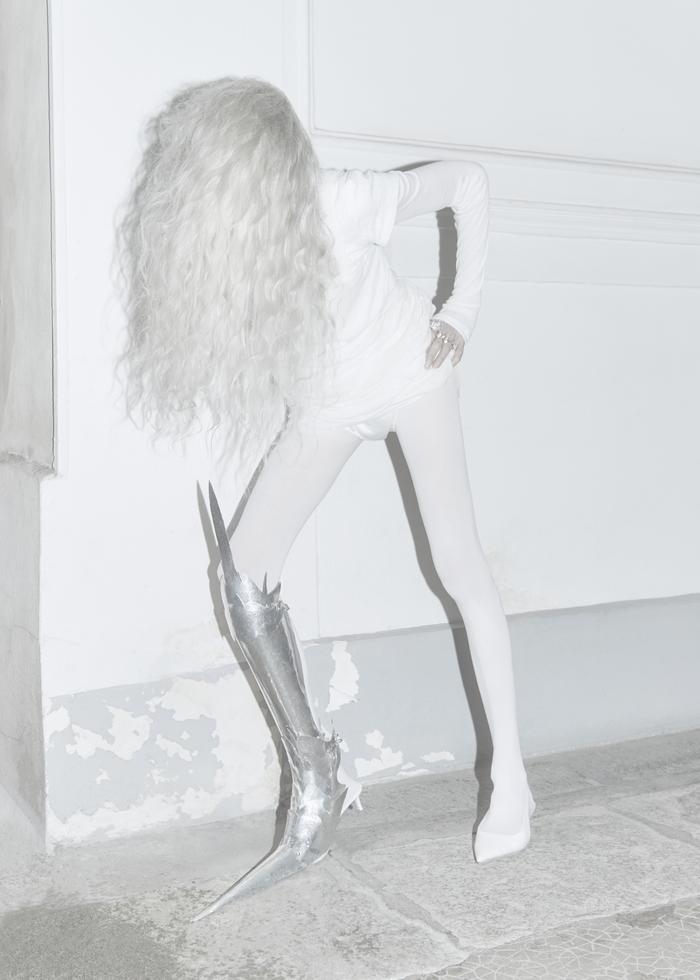
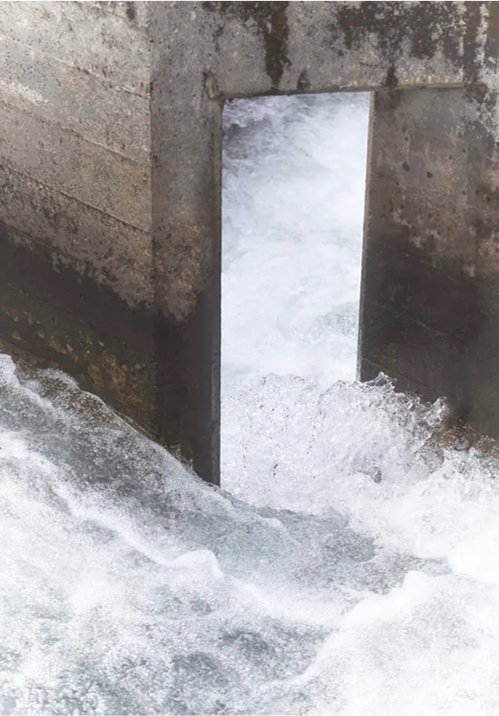
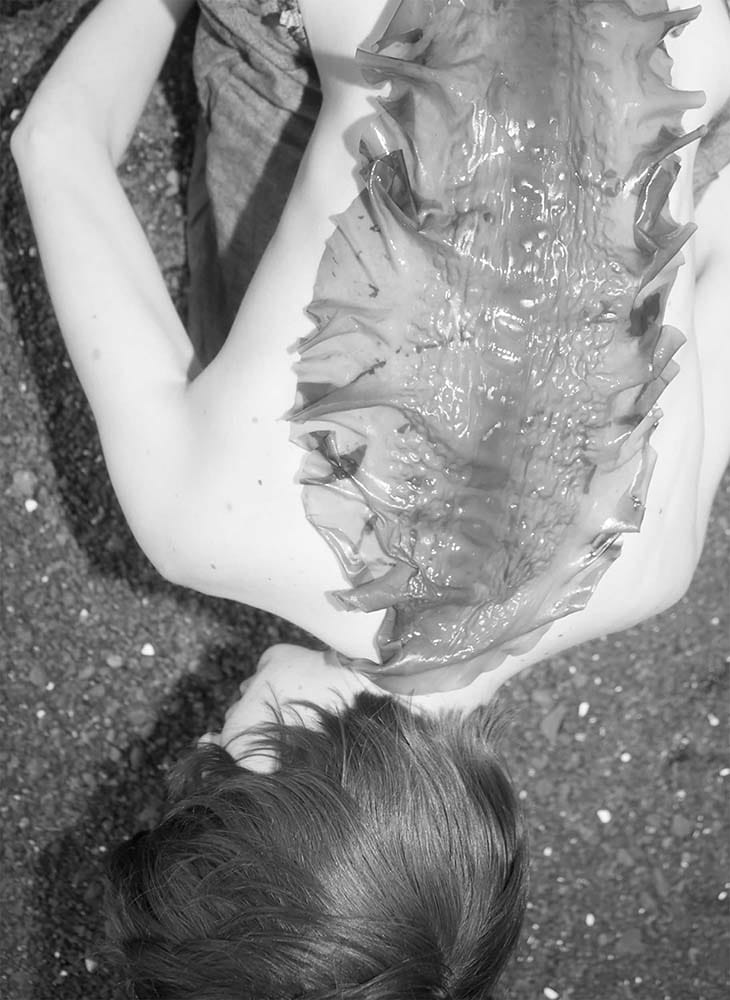
Bella Spantzel is a German photographer based in Berlin. With her dreamy, ethereal aesthetic, she has developed a meditative and dreamlike approach to photography, evoking the creation of a deeply personal imaginary world.
Her process constantly takes into account the invisible within the captured or created image. Imbued with serenity and mystery, her images do not seek to be deciphered, but felt. Through her work, the photographer seeks to unveil this hidden layer, inviting the viewer not only to observe, but also to contemplate and explore what it truly means to “see.”
These inquiries raise essential questions: how can we capture what eludes representation? What lies at the edge of our perception? From spiritualist photography in the late 19th century to Katie Bouman’s recent images of a black hole, photography has been viewed as a “means of reaching the invisible.” In her work, Spantzel explores how photography’s intrinsic limitations —its inability to capture or represent everything— can in fact be a source of revelation. As the philosopher Roland Barthes once said, arguing that “to see a photograph properly, it is better to look away or close one’s eyes,” she proposes approaching photography in a way that goes beyond mere vision.
Eloïse Labarbe-Lafon
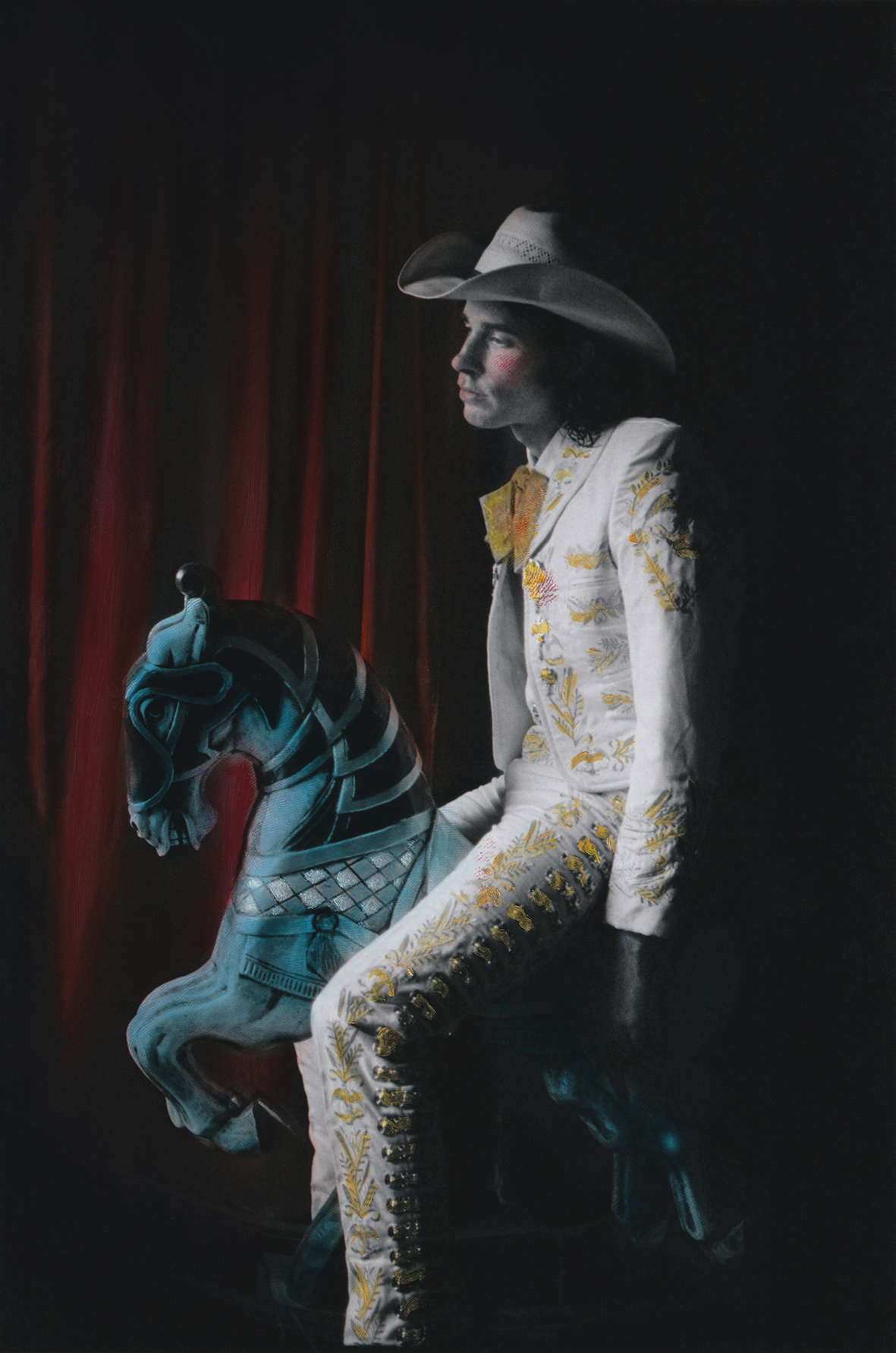
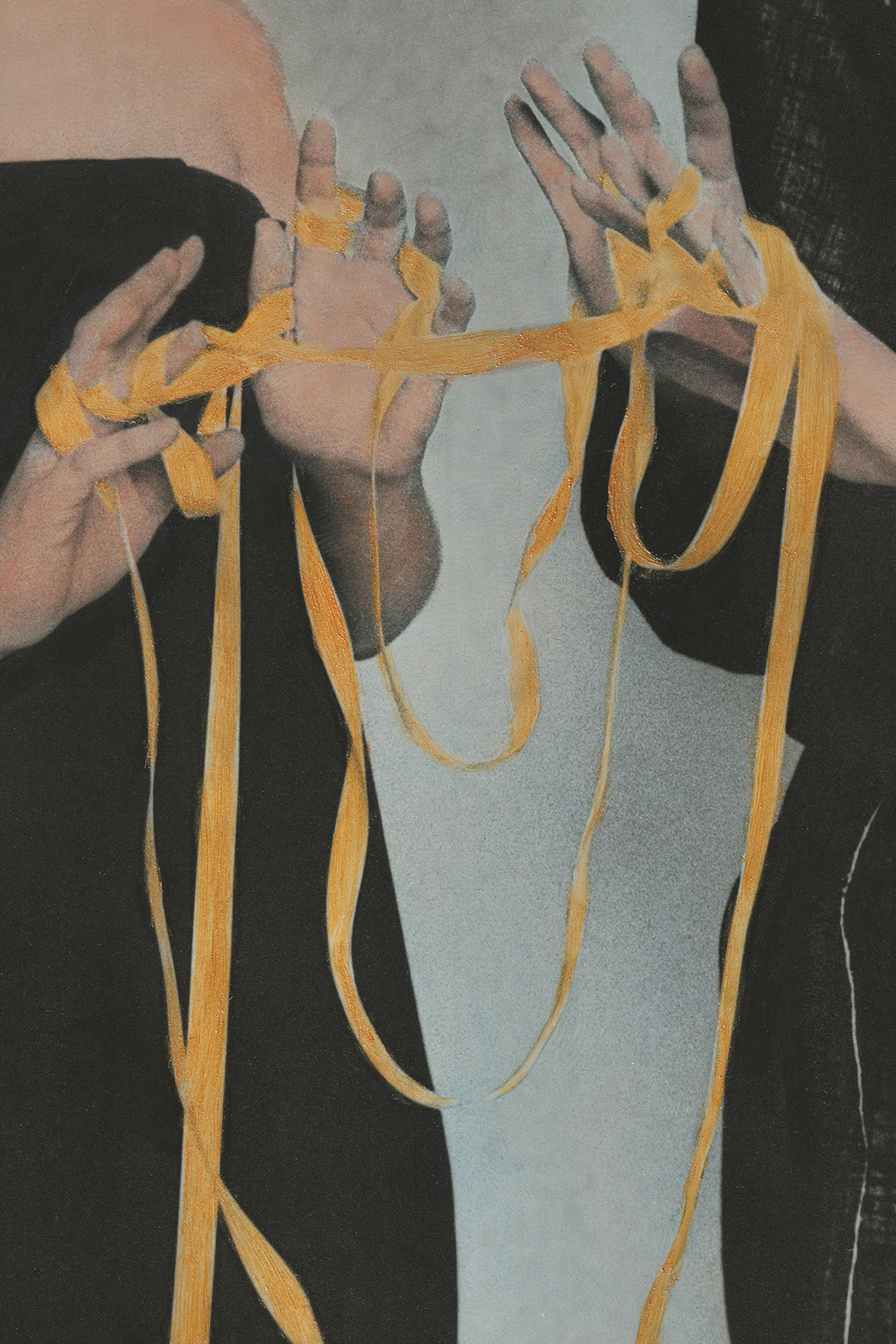
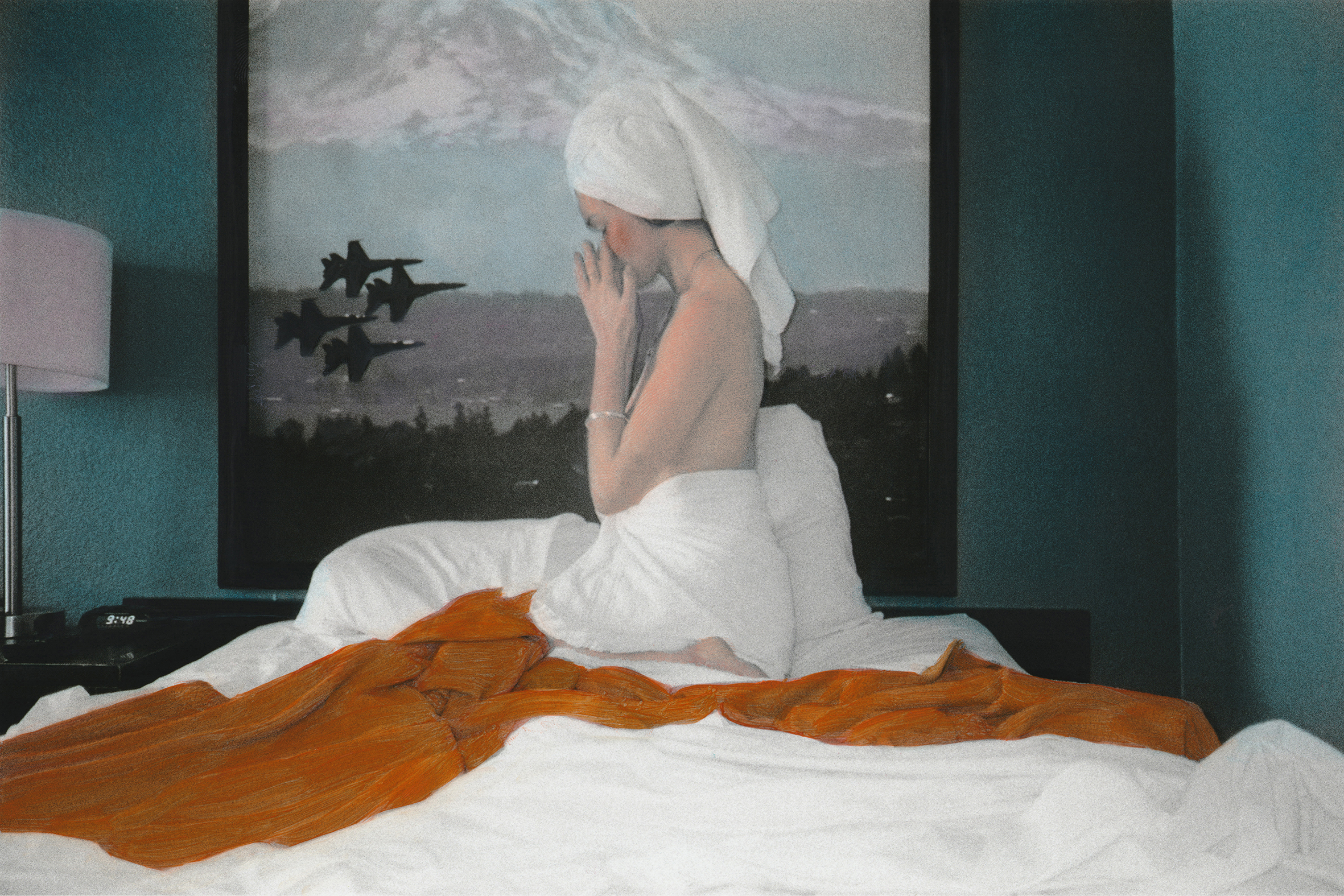
With her soft and dreamy tones, Eloïse Labarbe-Lafon captures this indescribable feeling of nostalgia for elsewhere. It is what the Germans call Fernweh or the Welsh call Hiraeth: the sweet melancholy of wanting to return to an imaginary childhood home, to relive holidays that we only remember through old photos, to revisit a distant past that we were never really there to experience.
This feeling of tender nostalgia comes from the themes as well as the technique used by the artist, inspired by both Victorian photography and colourized postcards of the 1900s. Taken in black and white, the photographs are then colored by hand in a process developed through her research into experimental cinema and the alteration of film. With her fingertips or a brush, Eloïse Labarbe-Lafon gives personal colors and shapes to these captured moments and creates idealized realities.
Quentin Fromont
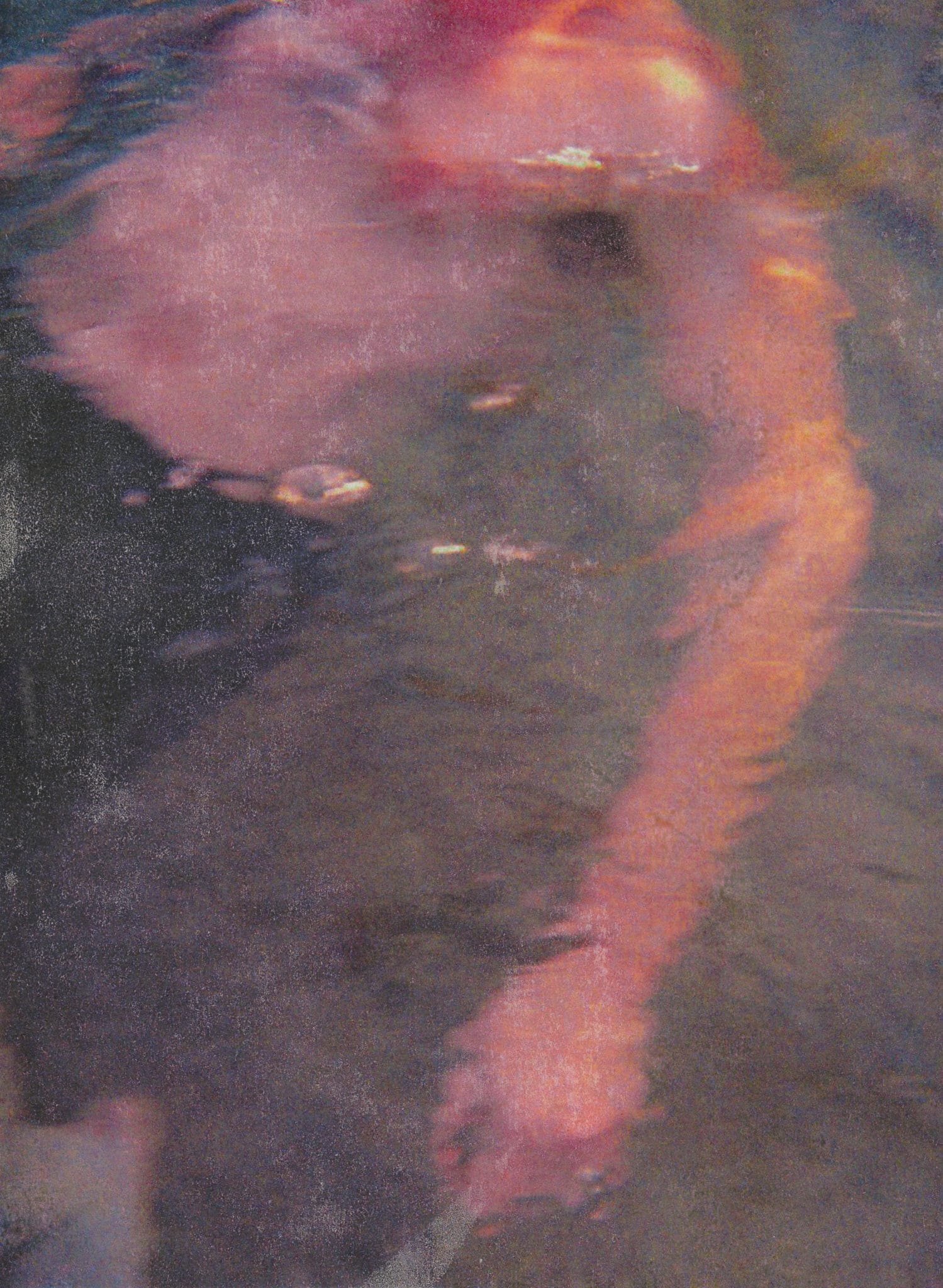
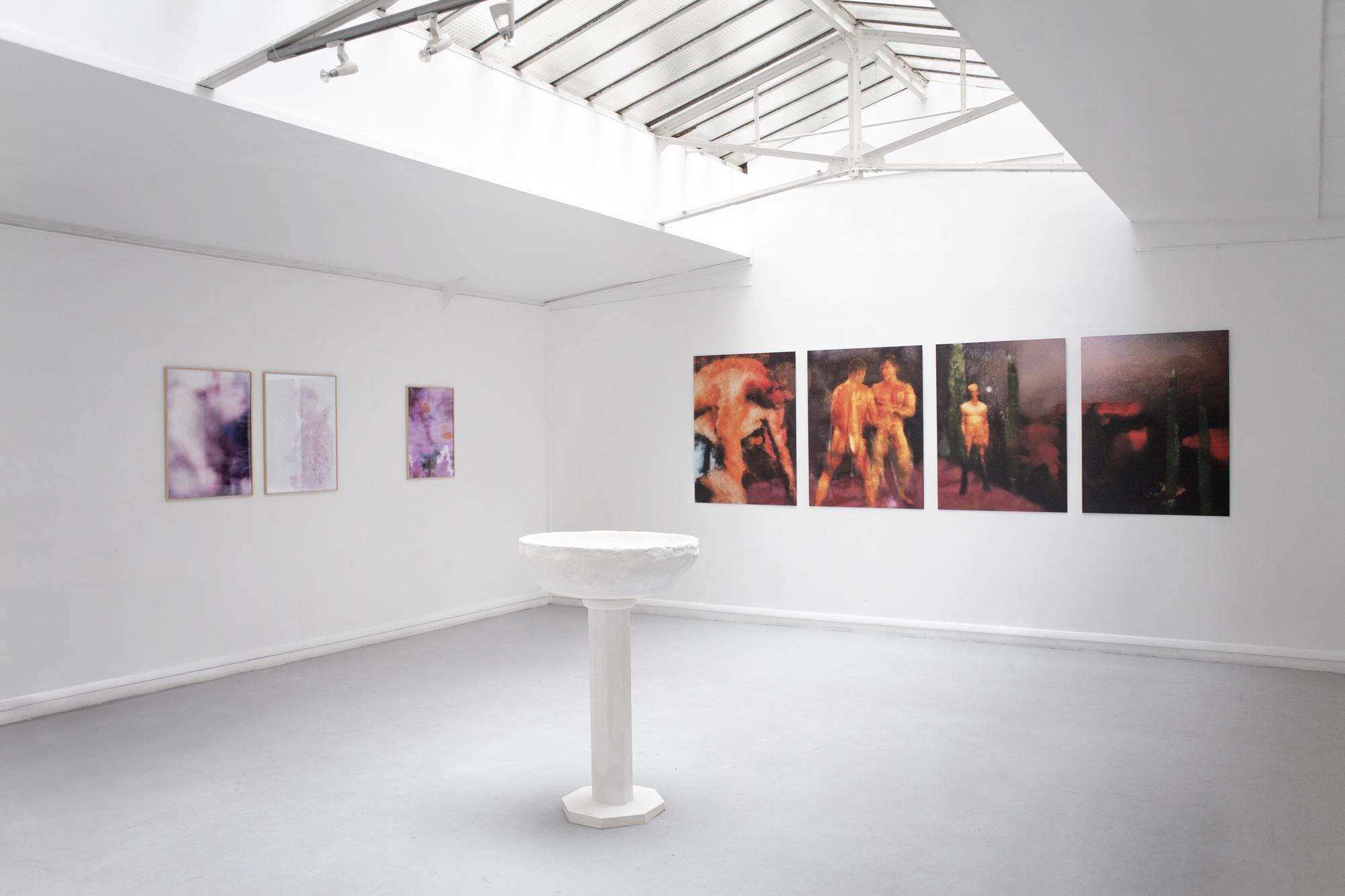
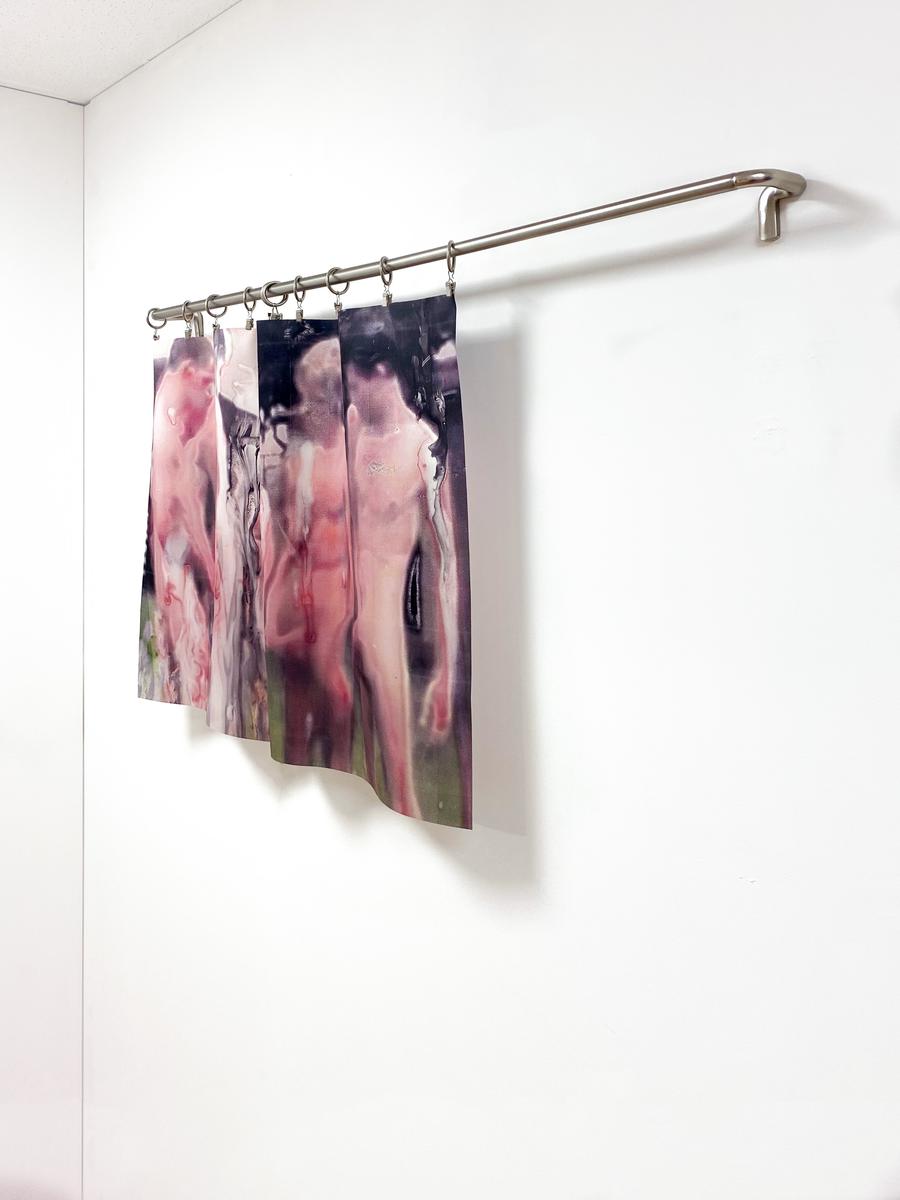
In his work, Quentin Fromont seeks an aesthetic approach to color and form that can resonate with a wide audience. At the same time, most of his projects convey a strong political message about desire. These two aspects of his practice are thus distinguished by their messages: contemplative work, where the political is underlying; and directly engaged work with projects addressing the issue of same-sex couples, desire, and the dangers within spaces of free gay sexuality.
This fascination with the coast, the beach, and the sea stems in particular from summer vacations; that special time when the body “is more here than anywhere else”, and which evokes first emotions and first kisses. Added to these questions, the artist is interested in mythology. The island is presented as an otherworldly space, a utopia cut off from the world, like the mythological island of Arcadia, a “safe place devoted to carnal pleasures, love, sexuality, and desire” where all fantasies could come true.
Sarah Fuchs
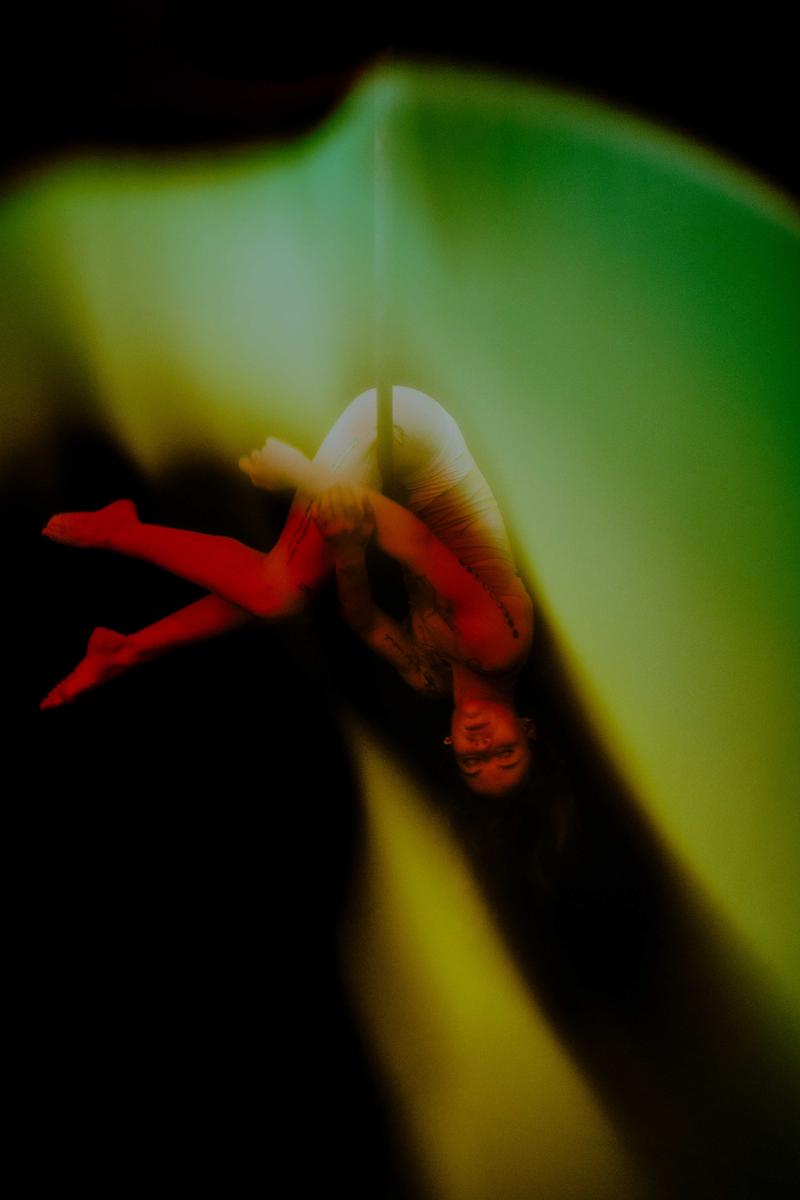
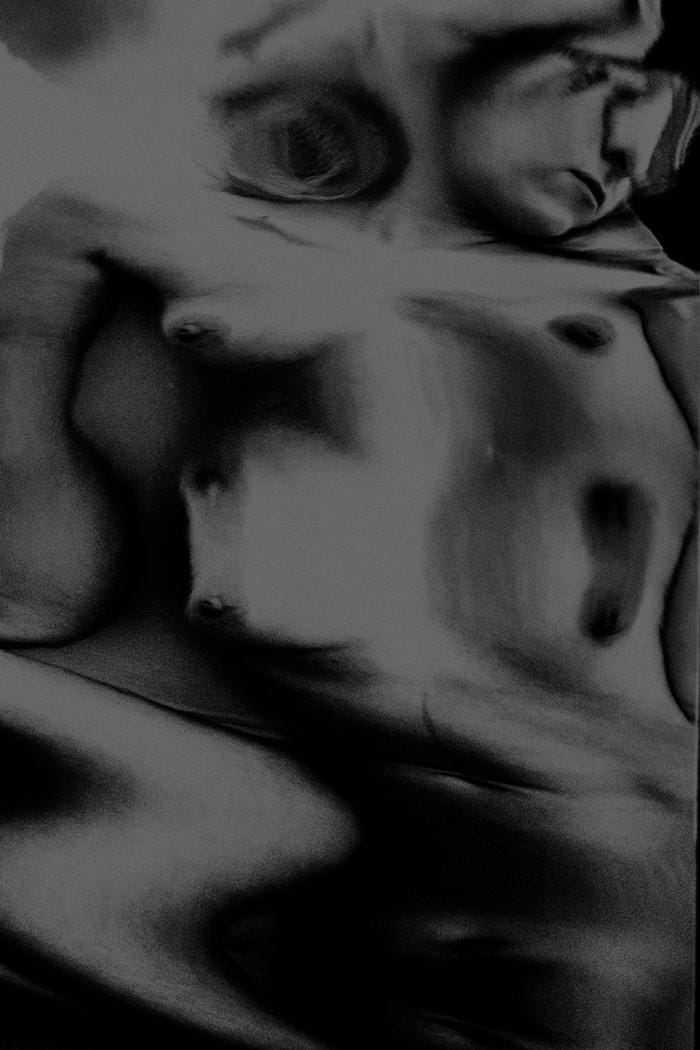
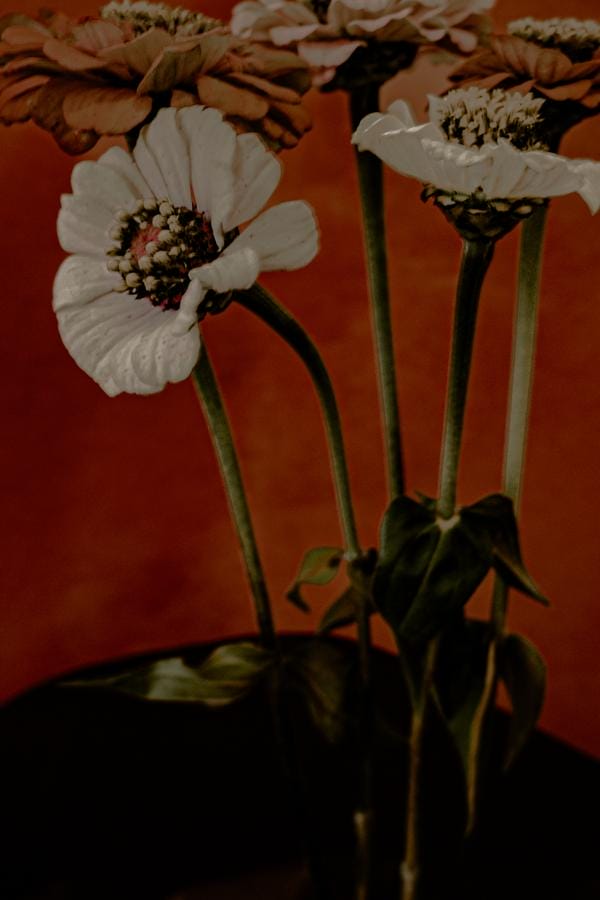
Sarah Fuchs is a Norwegian photographer and visual artist based in Berlin. Her work spans fashion, portraiture, and conceptual art, and is characterized by dreamlike atmospheres, rich textures, and deep colors.
Her work stands out for the way she manipulates images using filters, glass, and distorting mirrors, producing photographs in which shapes and colors are reimagined in unique ways. Rather than following a linear narrative, she constructs her images around textures, reflections, and lighting effects, offering a thoughtful and carefully crafted perspective on her subjects.
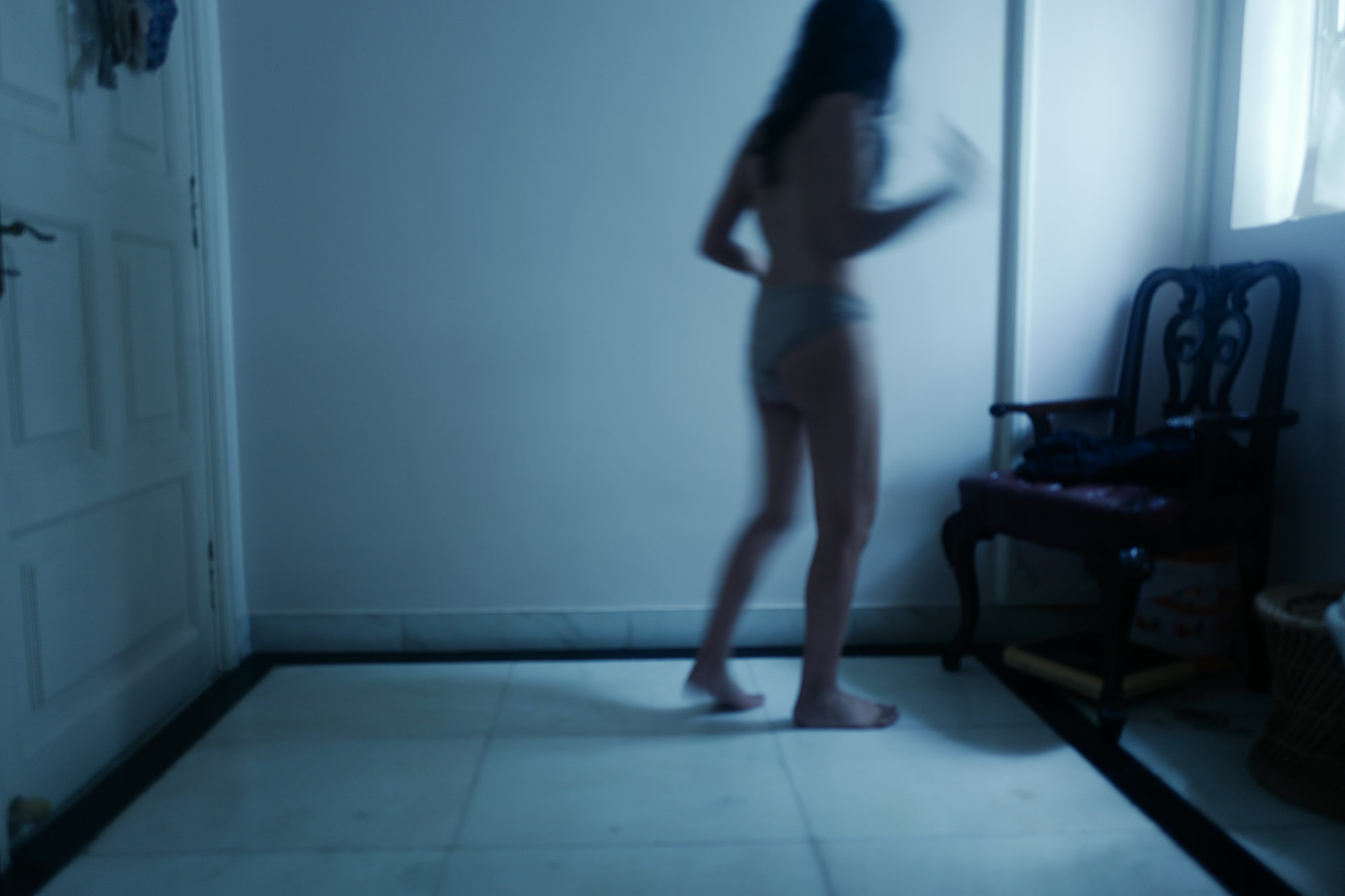
Working intuitively with the interplay of sharpness and blur, presence and transience, she seeks to reveal beauty in silent moments. In particular, she sees blur not as a flaw, but as an intimate truth: an image does not need to be sharp or strictly framed to be powerful. This approach, which draws on surrealism, gives her photographs a quality that is both mysterious and deeply human, where reality dissolves and ambiguity becomes a source of interest and reflection.